
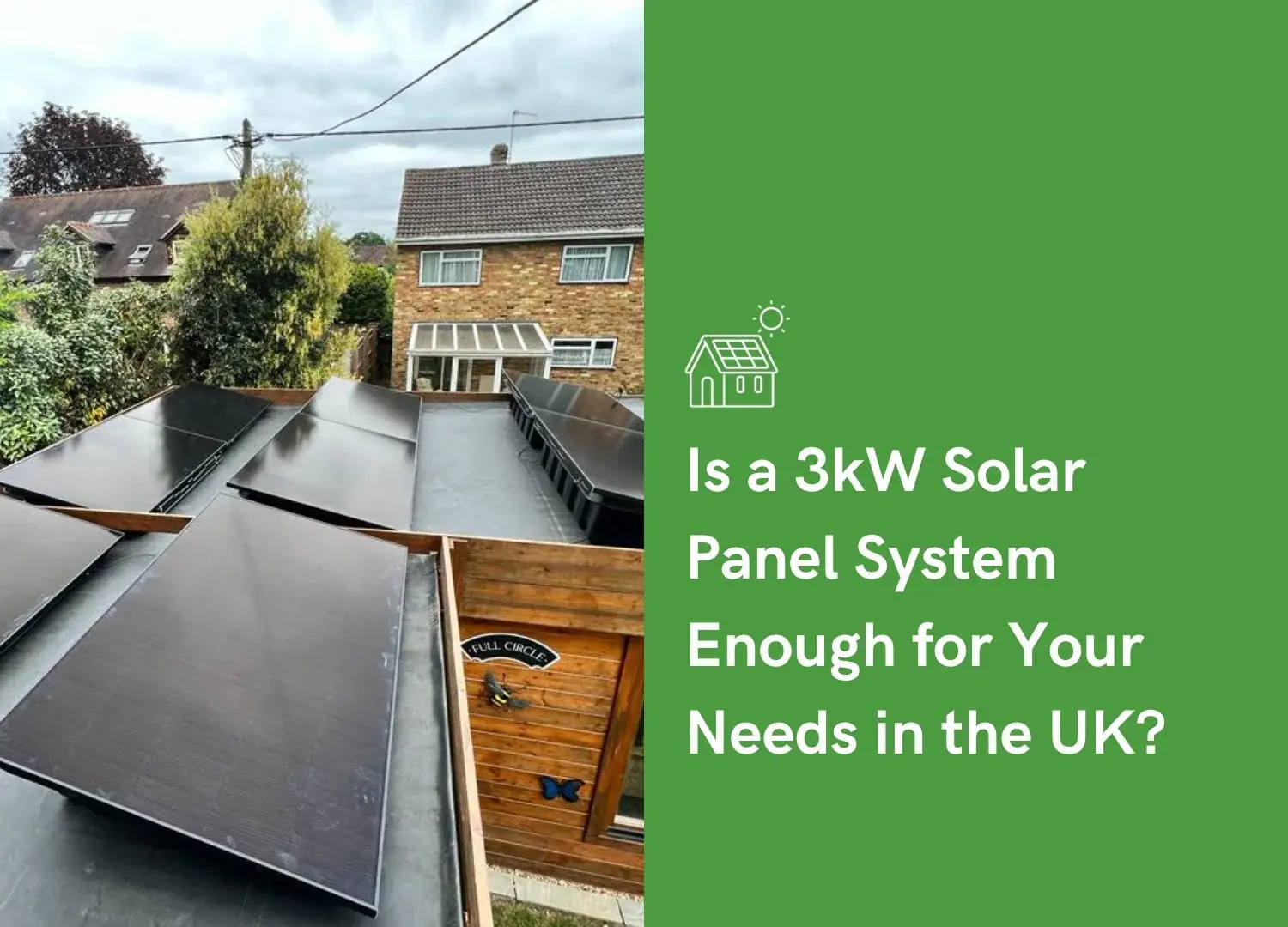
A 3kW solar panel system suits homes using between 3,000kWh and 4,500kWh per year, roughly a two- or three-bedroom house with one or two occupants. If your consumption falls outside that range, the system size should shift accordingly.
How Much Energy Will It Produce?
In the UK, a 3kW system generates around 2,400-2,700kWh per year. A household in Cornwall will see better output than one in northern Scotland. The south simply gets more peak sun hours. Modern panels produce usable power on overcast days, so the UK's grey reputation doesn't rule out solar.
Panels perform best on a south-facing roof pitched between 30 and 40 degrees. East- or west-facing roofs still work; expect to lose roughly 15-20% of potential output.
How Many Panels Do You Need?
Most 3kW systems use 8-10 panels, depending on panel wattage. Ten 300W panels hit 3kW exactly. If you opt for higher-efficiency 430W monocrystalline panels, seven panels cover the same output in less roof space, useful if your available area is limited.
A 3kW system needs roughly 20-23 square metres of usable roof space.
What Does It Cost in 2026?
A fully installed 3kW system (panels, inverter, scaffolding, and MCS certification) typically runs between £4,000 and £5,500. Residential installations carry 0% VAT, confirmed through March 2027.
Payback periods sit at around 7-10 years for most homes at the current electricity rate of approximately 27p/kWh. After that, you draw free power for the remaining life of the system. Most panels carry 25-year performance guarantees.
Government Incentives in 2026
Smart Export Guarantee (SEG): Electricity you export to the grid earns a per-unit payment from your energy supplier. Rates range from 4p to 15p per kWh; Octopus Energy is currently among the more competitive options. You register with your chosen supplier once your system is MCS-certified.
Warm Homes funding: ECO4 runs until December 2026. The Warm Homes: Local Grant can fully fund energy efficiency and low-carbon heating measures worth up to £30,000 (up to £15,000 each) for eligible low-income households in England (EPC D-G), and the wider Warm Homes Plan is expected to add low-interest loans for all households from 2027. Equivalent schemes run in Wales (Warm Homes Nest), Scotland (Home Energy Scotland), and through English local authorities (Warm Homes Local Grant).
Zero VAT: All residential solar panels and batteries qualify for 0% VAT through March 2027.
Homes with an EPC rating of E, F, or G are more likely to qualify for funded support. A solar installation that improves your EPC can also add to your property's market value. Research from the Urban Big Data Centre (University of Glasgow) found homes with solar command roughly a 6-7% price premium, though any uplift varies by property and local market.
Planning Permission
Most domestic solar installations fall under permitted development and need no planning permission. Exceptions apply to listed buildings, conservation areas, and ground-mounted systems above certain size limits. Your installer handles the MCS certification and any required DNO notification as part of the job.
Pairing with Battery Storage
A solar battery lets you use generation you'd otherwise export. Instead of selling surplus electricity back to the grid at 4-15p/kWh, you consume it at home later, avoiding buying it back at 27p/kWh. The payback maths improve accordingly, and you keep power during grid outages.
A home battery sized at 5-10kWh suits most 3kW systems. The full system including battery typically runs £8,000-£12,000 installed.
Maintenance
The main task is cleaning panels two or three times a year to clear dust, debris, and bird droppings. A periodic inverter check rounds out routine upkeep. Most installers offer service packages; annual running costs are low enough that they have little effect on the overall payback period.
Most monitoring apps give you live output data, so a drop in generation is obvious before it becomes a problem.
Common Questions
Does a 3kW system work for a small business? Yes, for premises with moderate daytime energy use. If your business runs energy-intensive equipment, a larger system will serve you better. The calculation is the same as for domestic use.
Are financing options available? Solar loans and leasing products are widely available. The Warm Homes Plan includes 0% interest financing for eligible homeowners. Spreading the upfront cost adds a small premium overall but makes the investment accessible without a £4,000-£5,500 lump sum.
What if I want to go off-grid? A standard 3kW system feeds into the grid rather than replacing it. Full off-grid setups require a larger panel array and a battery bank sized for several days of autonomy, typically 8-9kWh minimum. Expect a combined system cost of around £15,000 and above.
To find out whether a 3kW system fits your roof and energy use, contact us for a free, no-obligation quote. We'll respond within one working day.
Sources
- Urban Big Data Centre, University of Glasgow: the research behind the ~6-7% solar property-price premium (the study found a 6.1%-7.1% premium): How do solar panels affect property prices in the UK?. Underlying peer-reviewed study: Asproudis, Gedikli, Talavera & Yilmaz, "Returns to solar panels in the housing market: A meta learner approach", Energy Economics, full paper.
- Microgeneration Certification Scheme (MCS): mcscertified.com.
- HMRC, 0% VAT on energy-saving materials (VAT Notice 708/6; zero rate applies to 31 March 2027): official guidance.
- Ofgem, Smart Export Guarantee (SEG): official scheme page.
- GOV.UK, Warm Homes: Local Grant: scheme guidance.
- Ofgem, Energy Company Obligation (ECO4): official scheme page.